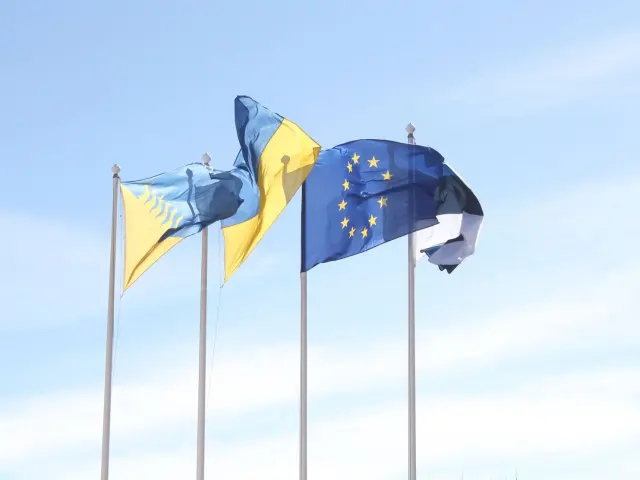

Heading into a meeting with colleagues from another country? European cultural differences mostly come down to how direct people are, how much they leave unsaid and how they build trust. Learn those habits first.
This page is one part of a wider guide to european culture, so start there for the bigger picture.
| Item | Value |
|---|---|
| Size of Erin Meyer’s culture framework | 8 different criteria |
| Lowest-context cultures, per Meyer | The United States, followed by Canada, Australia, the Netherlands and Germany |
| European countries named for direct negative feedback | Russia, the Netherlands, Germany, France and Denmark |
| British feedback style | Understatement, such as “we are not quite there yet” |
| Recurring workplace patterns in one practical guide | five recurring patterns |
These figures come from Welcome to the Jungle’s summary of Meyer’s work and Talaera’s guide to cultural differences in international business. They can change as the sources are updated, so check the source before you rely on them.
Why national habits matter in European workplaces
A shared working language does not mean shared habits. Erin Meyer, a professor at INSEAD whose work focuses on cross-cultural communication, built a culture map that covers 8 different criteria for decoding how culture affects business, as Welcome to the Jungle explains.
A practical guide from Talaera boils the same idea down to five recurring patterns that you can watch for in any team:
- Directness and feedback: how openly people disagree, criticise and say no.
- Hierarchy and decision-making: who speaks and who decides.
- Time and meetings: whether schedules are fixed commitments or flexible guides.
- Relationship-building: how much personal trust must exist before business moves.
- Written versus spoken norms: how much weight emails and documents carry compared with calls.
Spotting which pattern is causing friction is usually quicker than blaming a person. A missed deadline, a blunt reply or a silent meeting may simply be a different norm at work.

The rest of this page takes the patterns that matter most in Europe in turn: context, feedback, trust, disagreement and persuasion.
Low-context and high-context communication
The most useful idea for everyday exchanges is context. Ed Batista’s notes on Meyer describe low-context communication as precise, simple, and clear, while high-context messages are layered and often read between the lines.
According to Meyer, as quoted by Welcome to the Jungle, the United States is the lowest-context culture in the world, followed by Canada and Australia, the Netherlands and Germany. The same source places France as more high-context than the American and German styles, but less so than Japan.
Language plays a part as well. Shortform’s overview says English-speaking countries cluster at the low-context end, countries that speak Romance languages cluster in the middle, and Asian countries sit toward the high-context end.
Your own position matters less than the gap between you and the other person. If you come from a higher-context culture, you may find that low-context counterparts state the obvious or sound patronizing. In the other direction, a more explicit speaker may find a higher-context colleague secretive.
When a team mixes styles, a few habits keep things clear:
- Make the default mode low-context: state everything explicitly and in writing to reduce confusion.
- Ask questions whenever the meaning is unclear, and check that your own message landed.
- Recap what was said at the end of the meeting and follow up with an email.
Shortform adds a warning: the most potential for miscommunication lies between two people from different high-context cultures, because each looks for subtext but reads it by different norms.
How direct is too direct? Feedback across Europe
Feedback is where directness shows most clearly. Welcome to the Jungle reports that most European cultures give direct negative feedback, with people from Russia, the Netherlands, Germany, France and Denmark offering frank, often blunt comments that can stand alone.
The British are a notable contrast within Europe. The same source says they may be masters of understatement, as in “we are not quite there yet”, and that outsiders may need a translation guide to know what such phrases really mean.
Even the word choice can flip. The article notes that where Americans tend to call everything “great” or “awesome”, in France “not too bad” might mean “amazing”. It also says Americans are trained to wrap positive messages around negative ones, while the French are trained to criticize passionately and provide positive feedback sparingly.
If you are working with people who are more direct than you, the advice is not to imitate them. Even in the most direct countries, it remains quite possible to be too blunt.
If you are the direct one, soften your wording and learn to add positives. The safe fallback is to be more diplomatic and to avoid criticising anyone in front of a group.
Trust, disagreement and persuasion
Meyer’s work separates two routes to trust. In task-based cultures, according to Ed Batista’s summary, work relationships are built and dropped easily, based on the practicality of the situation. In relationship-based cultures, trust is built through sharing meals, evening drinks, and visits at the coffee machine.
That difference explains why one colleague treats lunch as a waste of time and another treats it as the real start of the project. Neither is being rude; they are collecting different evidence about whether you are reliable.
Disagreement works the same way. In one style, disagreement and debate are positive for the team. In the other, open confrontation is seen as inappropriate and likely to break group harmony or damage the relationship.
Persuasion also varies. Principles-first reasoning goes from theory to fact, from general concepts to illustrations, whereas applications-first reasoning begins with facts and real-world stories to draw broader conclusions.
Before a presentation, it helps to ask which of the two your audience expects. Leading with a concept may feel natural to you and still lose a room that wants the practical case first.
Why national labels only go so far
National maps are starting points, not verdicts. Batista passes on a caution from two University of Queensland researchers about the ecological fallacy: the error of assuming that statistical relationships at a group level also hold for individuals in the group.
Shortform also points out that Meyer bases these positions on anecdotes and personal experience, so treat the placements as informed generalisations.
Regional shorthand can mislead as well. Talaera warns that grouping countries by region becomes dangerous when it flattens real differences in how people give feedback, run meetings, or build trust. It notes, for example, that some Swiss organizations place substantial emphasis on consultation and stakeholder alignment before decisions move forward, which does not mean every Swiss team works that way.
Silence is another trap. The same guide says that in meetings, silence should not automatically be read as agreement, disengagement, or a national communication rule.
Two practical checks help before any cross-border exchange. Language comes first, so look at the official languages of the eu before assuming everyone is comfortable in English. Then, before you fix a date, check the public holidays in europe that apply to your counterpart’s country.
Frequently asked questions
Are European cultures similar enough to treat as one group?
Show answer
No. Even neighbouring countries can differ sharply on feedback, decision-making and meeting style, so it is better to learn about the specific country and team you are dealing with.
Is low-context communication the same as being rude?
Show answer
Not at all. It simply puts the burden of clarity on the speaker, and a more explicit colleague is usually trying to prevent confusion rather than to talk down to you.
What is the lowest-risk way to give criticism to a European colleague?
Show answer
When you do not know the other person’s norms, a private and diplomatic conversation is the lower-risk default, according to the Welcome to the Jungle summary. Public criticism is the habit most likely to backfire.
Can I use a country’s cultural profile to predict one person’s behaviour?
Show answer
Treat any profile as a hypothesis to test. Talaera’s guide calls such patterns starting hypotheses, not predictions about a specific person or organization, so watch how your colleague actually behaves.