You may be wondering why Europe Day 9 May matters. It marks the 1950 Schuman Declaration, a plan to pool French and German coal and steel so that war became materially impossible.
Europe Day is one part of the wider story of european culture, and this page traces where it began and how it is marked.
| Item | Value |
|---|---|
| Date celebrated by the EU | 9 May |
| Event commemorated | Schuman Declaration, 1950 |
| Adopted as Europe Day | 1985, in Milan |
| Council of Europe’s own date | 5 May, established in 1964 |
| Public holiday in Luxembourg | Since 2019 |
| 2026 open-doors event | Saturday, 9 May, 10:00 to 18:00 CEST |
These figures come from data.europa.eu and Wikipedia’s Europe Day entry. They can change, so check the source before you rely on them.
Where does Europe Day come from?
Every year on 9 May, the European Union marks the anniversary of a speech given in 1950, according to data.europa.eu. French Foreign Minister Robert Schuman presented his declaration that day, proposing closer cooperation to secure lasting peace after the Second World War.
The EEAS adds that Schuman proposed that France and Germany, two nations with a long and bloody history, join their coal and steel production. He read the declaration in the Salon de l’Horloge at the Quai d’Orsay in Paris on 9 May 1950.
His central argument was that shared production would make war “not merely unthinkable, but materially impossible” between the two countries. That idea is the core of the anniversary.
From coal and steel to the European Union
West German Chancellor Konrad Adenauer said yes almost instantaneously, the EEAS notes. On 18 April 1951, representatives from France, Germany, Italy, Belgium, the Netherlands and Luxembourg signed the Treaty of Paris, which created the European Coal and Steel Community (ECSC).
Under the ECSC, member states transferred some sovereign powers to new bodies, as the EEAS describes:
- an independent High Authority;
- a Common Assembly of national parliamentarians;
- a Special Council of national ministers;
- a Court of Justice.
The ECSC progressively evolved into the European Economic Community and later the European Union. Its original four institutions eventually turned into the European Commission, the European Parliament, the EU Council and the European Court of Justice, per the EEAS.
Schuman expected progress to be gradual. He said that Europe “will not be made all at once, or according to a single plan” and that it would be built through concrete achievements creating a de facto solidarity, the EEAS records.
How 9 May became Europe Day
Heads of state and government meeting in Milan in 1985 decided to officially name 9 May Europe Day, according to the EEAS. Wikipedia dates the European Council’s adoption of the day, together with the flag of Europe and other items, to 29 June 1985.
The European Parliament “formally recognised” Europe Day in October 2008, the same entry says.
The day became one of the main symbols of the European Union, alongside the twelve-starred flag, the slogan “In varietate concordia” and an anthem based on Beethoven’s “Ode to Joy”, the EEAS says. The 2004 treaty establishing a Constitution for Europe was meant to consolidate these symbols as official emblems, but the provision was dropped after ratification failed.
A separate guide to the eu flag and anthem meaning looks at those emblems in more detail.
How Europe Day is celebrated
According to Wikipedia, EU institutions open their doors to the public every year in Brussels and Strasbourg. For 2026, data.europa.eu said events would run on Saturday, 9 May, from 10:00 to 18:00 CEST, and that the edition also marked 40 years of official Europe Day celebrations.
Observance takes several forms across the continent:
- Open-doors days at EU institutions in Brussels and Strasbourg (Wikipedia).
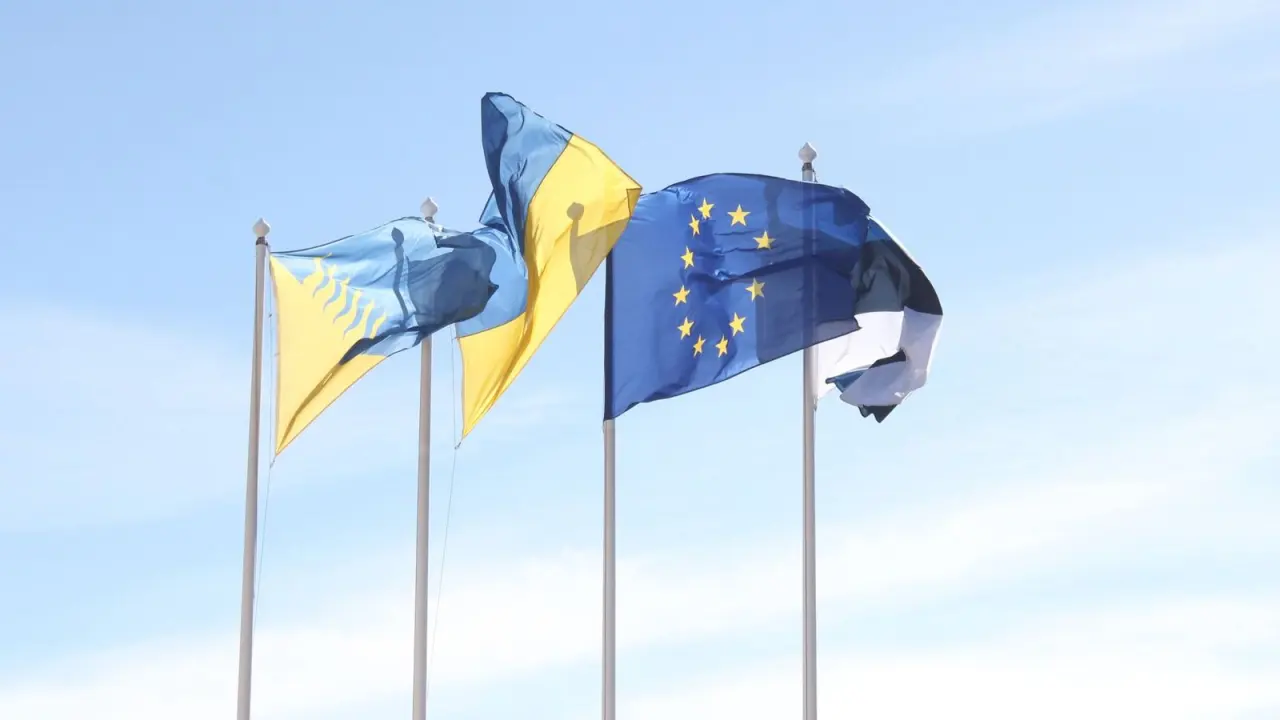
- Flag hoisting and a variety of events in the other member states (EEAS).
- A Europe Week, or Europawoche, centred on 9 May in Germany since 1995 (Wikipedia).
- Virtual events in 2020 and 2021, when the COVID-19 pandemic prevented physical ones (Wikipedia).
Cultural programmes such as the european capital of culture offer a different kind of shared European celebration alongside the day itself.
Is Europe Day a public holiday?
It depends on where you are. As of the EEAS’s May 2023 piece, Luxembourg and Kosovo had established Europe Day as a national holiday.
- Luxembourg: 9 May became an official public holiday in 2019, per Wikipedia.
- Romania: the day coincides with independence day (EEAS).
- Croatia and Lithuania: legally recognised, but not a public holiday (EEAS).
- EU institutions in Brussels: staff are given a day off unless Parliament is in session (EEAS).
- Ukraine: celebrated on the third Saturday of May between 2003 and 2023, then moved by decree of 8 May 2023 to 9 May (Wikipedia).
Why does the Council of Europe mark 5 May?
The Council of Europe is a separate organisation with its own date. It was founded on 5 May 1949, so it chose that day when it established its holiday in 1964, Wikipedia explains.
The two observances share one visible element, because both are celebrated by displaying the flag of Europe, the same page notes.
Frequently asked questions
What does Europe Day celebrate?
Show answer
In the EEAS’s description, it honours the start of political and economic integration on the continent and the lasting peace that followed from decades of joint effort.
Who is seen as the mastermind behind the Schuman Declaration?
Show answer
The EEAS names Jean Monnet, Schuman’s close aide, as the person now considered its mastermind. He was also named the first president of the High Authority.
Can you visit EU institutions on Europe Day?
Show answer
Open-doors events are a regular feature in Brussels and Strasbourg, according to Wikipedia. The data.europa.eu page invited citizens to discover where European decisions are made, so check the official Europe Day website for the programme in your area.
Is Europe Day the same as the Council of Europe’s day?
Show answer
No. They are two observances by two organisations: the EU marks 9 May, while the Council of Europe marks 5 May, as Wikipedia sets out.